

Hiring the wrong role for the wrong phase is one of the most expensive mistakes in commercial construction. Owners sign a construction manager expecting a builder or hire a general contractor without the NYC operations experience to back it up. Both errors cost time, money, and momentum.
In New York City, the stakes are higher. DOB permit timelines, occupied-building logistics, and multi-trade coordination demand clarity before any agreement is signed. Understanding the difference between a construction manager and a general contractor is not a theoretical exercise. It is the foundation of a well-run project.
What Is a General Contractor?
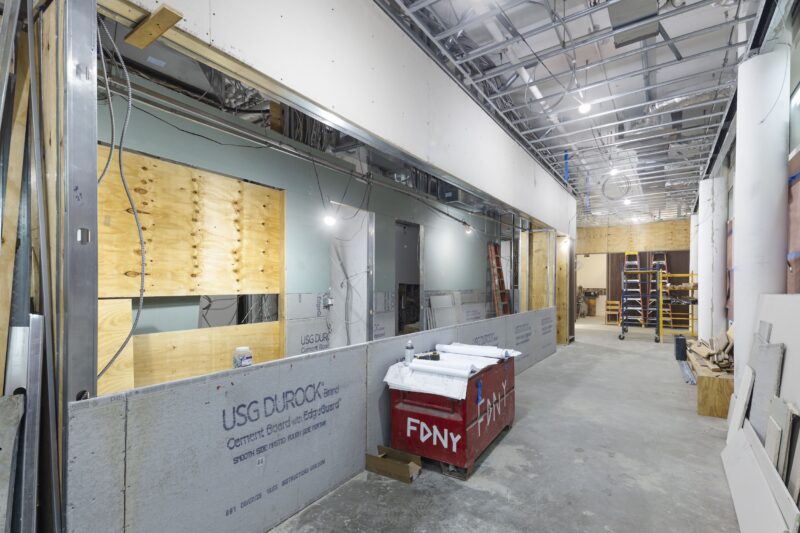
A general contractor executes the build. Once an architect completes design and files for NYC DOB permits, the GC takes over. They hire and manage subcontractors, control the job site, and carry full financial and operational accountability for delivering the project.
In NYC, that accountability includes coordinating deliveries through tight freight windows, managing noise ordinance schedules, and keeping trades sequenced in occupied buildings without disrupting neighboring tenants or triggering stop-work orders.
The GC owns the outcome. If a subcontractor falls behind or materials arrive late, the GC absorbs the operational impact and corrects it.
Key responsibilities of a general contractor
- On-site supervision: Daily oversight of all trades, safety compliance, and site conditions
- Subcontractor management: Hiring, scheduling, and holding subs accountable to scope and timeline
- Quality control: Inspecting work at every phase before the next trade begins
- Budget and schedule adherence: Managing costs and milestones against a fixed-price contract
- NYC logistics: Coordinating elevator access, delivery windows, and building management protocols
- MEP integration: Sequencing mechanical, electrical, and plumbing installation within commercial interior finishes
For office construction and retail build-outs, the GC’s execution precision directly determines whether the project opens on time and within scope.

What Is a Construction Manager?
A construction manager operates upstream. The CM enters during pre-construction, before permits are pulled and before subs are hired, to advise on budget, schedule, logistics, and coordination strategy.
The CM does not hold full execution risk. They work on a fee or cost-plus basis, providing planning oversight and coordination without assuming the contractual accountability of a general contractor.
In NYC, the CM’s value is highest in the planning phase: identifying permit dependencies, flagging site access constraints, and stress-testing schedules before they become job-site problems.
Key responsibilities of a construction manager
- Pre-construction advisory: Budget development, schedule structuring, and constructability review
- Permit and logistics planning: Coordinating with architects on filing vs permitting timelines and anticipating DOB review cycles
- Cost monitoring: Tracking budget performance across trades without carrying overrun risk
- Coordination oversight: Managing relationships between design teams, owners, and contractors
- Risk identification: Flagging scope gaps, sequencing conflicts, and access issues before construction begins
The CM’s limits are equally important to understand. Without a fixed-price contract and direct sub accountability, on-site execution authority is reduced. A CM alone does not replace a GC during the build phase.
When to Hire a Construction Manager vs General Contractor
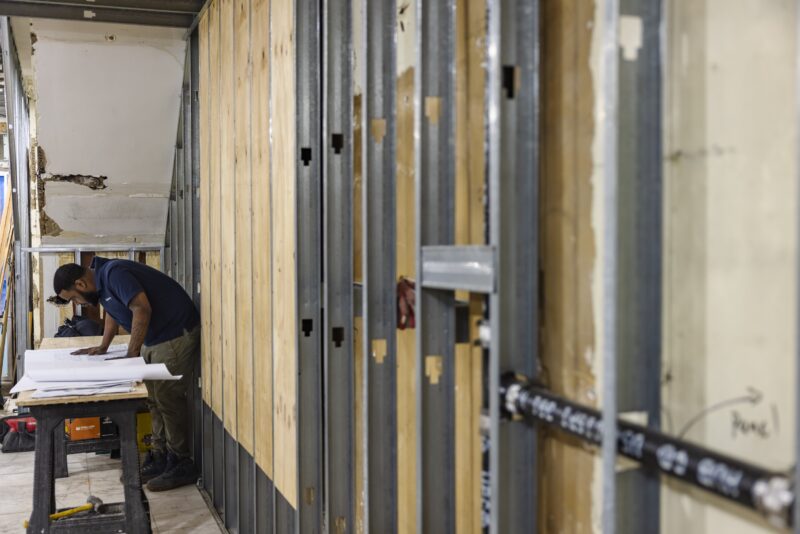
The decision comes down to project phase and owner involvement.
Hire a construction manager when:
- The project is complex enough to require pre-construction planning support
- The owner wants active input on budget and schedule before design is complete
- The scope involves multiple design consultants or phased approvals requiring coordination
Hire a general contractor when:
- Design and permits are in place and execution needs to begin
- The project demands a single point of accountability for delivery
- NYC logistics, such as occupied buildings, tight access, inspection sequencing, require proven on-site operations expertise
For most commercial interior projects in NYC, both roles are needed at different phases. A firm that provides construction management and general contracting eliminates the handoff gap—the planning context built in pre-construction carries directly into execution without a reset.
Ready to clarify which role your project needs? Talk to the Blueberry Builders team about your scope and timeline before you sign anything.
Construction Manager vs General Contractor: Key Differences
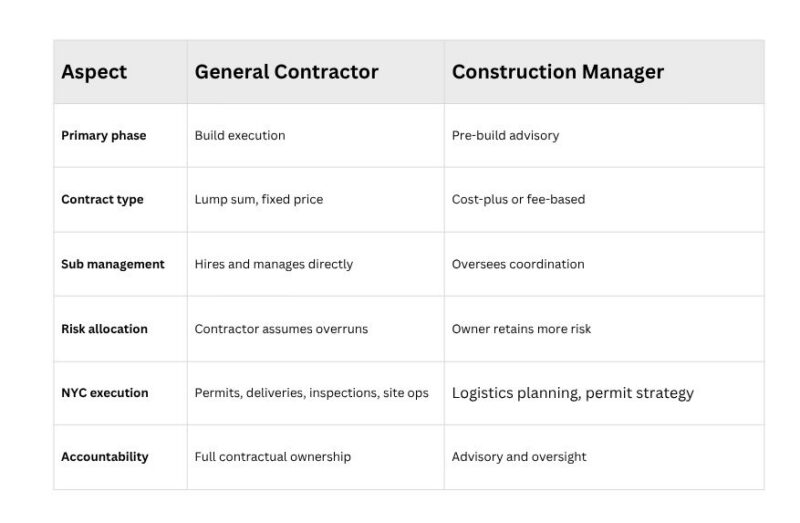
The clearest distinction: the GC is responsible when something goes wrong during the build. The CM is responsible for identifying problems before they become build-phase failures.
Pitfalls from Role Confusion in NYC
Here’s a quick recap of who owns what in NYC:
Owner
· Defines project scope, budget, and timeline
· Selects architect, CM, and GC
· Approves drawings, costs, and major decisions
· Coordinates with building ownership or co-op boards
· Signs contracts and funding agreements
Architect
· Develops design drawings and construction documents
· Files plans with the DOB and serves as Applicant of Record
· Coordinates with consultants (MEP, expeditor, etc.)
· Responds to DOB objections and secures approvals
· Supports inspections and closeout documentation
Construction Manager
· Provides pre-construction planning and advisory
· Develops preliminary budgets and schedules
· Identifies logistics constraints and sequencing risks
· Coordinates between owner, architect, and consultants
· Monitors cost and schedule during planning phases
General Contractor
· Pulls work permits after DOB approval
· Manages subcontractors and on-site construction
· Coordinates logistics, deliveries, and building access
· Schedules and manages DOB inspections
· Executes the build through punch list and closeout
Role confusion is common and can lead to some common pitfalls.
Assuming the CM will manage the full build. A construction manager hired for planning advisory does not automatically transition into a general contractor. Without a fixed-price contract and sub accountability, the build phase lacks an execution owner. In NYC, that gap shows up immediately: delivery failures, inspection delays, and trade sequencing breakdowns compound quickly in occupied buildings.
Hiring a GC without NYC operations experience. Technical construction competence is not enough in New York City. A GC unfamiliar with DOB inspection cycles, building management protocols, and urban logistics constraints can execute quality work that still misses every deadline. Local operational fluency is not optional.
Misunderstanding who handles permits.Architects file the plans with the DOB and act as Applicant of Record. Once plans are approved, the GC pulls the work permits, runs inspections, and keeps the build compliant through closeout. Owners who expect their GC to handle DOB filings from scratch are misaligned from the start.
Not planning for NYC-specific delays. Locked gas meters, restricted elevator access, co-op board approval windows, and DOH pre-requirements all affect commercial interior schedules. These are known variables. A structured partner identifies them in pre-construction and builds them into the schedule.
Overlooking the handoff between planning and execution. When a CM and GC are separate firms, the transition from advisory to build phase requires a full knowledge transfer. Context gets lost. Schedules built in planning get rebuilt from scratch. In a market where every week of delay has a dollar cost, that reset is avoidable.
Not sure which role your project needs—or whether you have the right partner for each phase? Start a conversation to learn how Blueberry Builders structures commercial interior projects from pre-construction through closeout.
Choose the Right Partner for Your NYC Project
The construction manager vs general contractor question is really a question about project structure. Every commercial interior in NYC needs both roles covered—the question is whether one partner can carry both without losing accountability or context.
For pre-construction, you need a CM who understands NYC permit timelines, can stress-test your budget before drawings are complete, and will identify logistics constraints before they become job-site problems.
For the build phase, you need a GC with proven on-site operations experience in New York City. Look for someone who knows how to sequence trades in occupied buildings, coordinate with building management, and move through DOB inspections without delays.
Blueberry Builders operates as both. Pre-construction advisory and build-phase execution run through the same team, on the same project, without a handoff gap. That structure is what allows NYC commercial interiors a seamless process from planning to completion.
Starting a commercial interior project in NYC? Contact Blueberry Builders to define scope, clarify roles, and build a project structure that holds from permit to punch list.
References
- Construction Management Association of America (CMAA) — What Is Construction Management?
- NYC Department of Buildings (DOB) — Obtaining a Permit
- NYC Department of Buildings (DOB) — Contractors
- Associated General Contractors of America (AGC) — About AGC